
Campus recreation and student centers advance belonging, engagement, and student outcomes through intentional operations
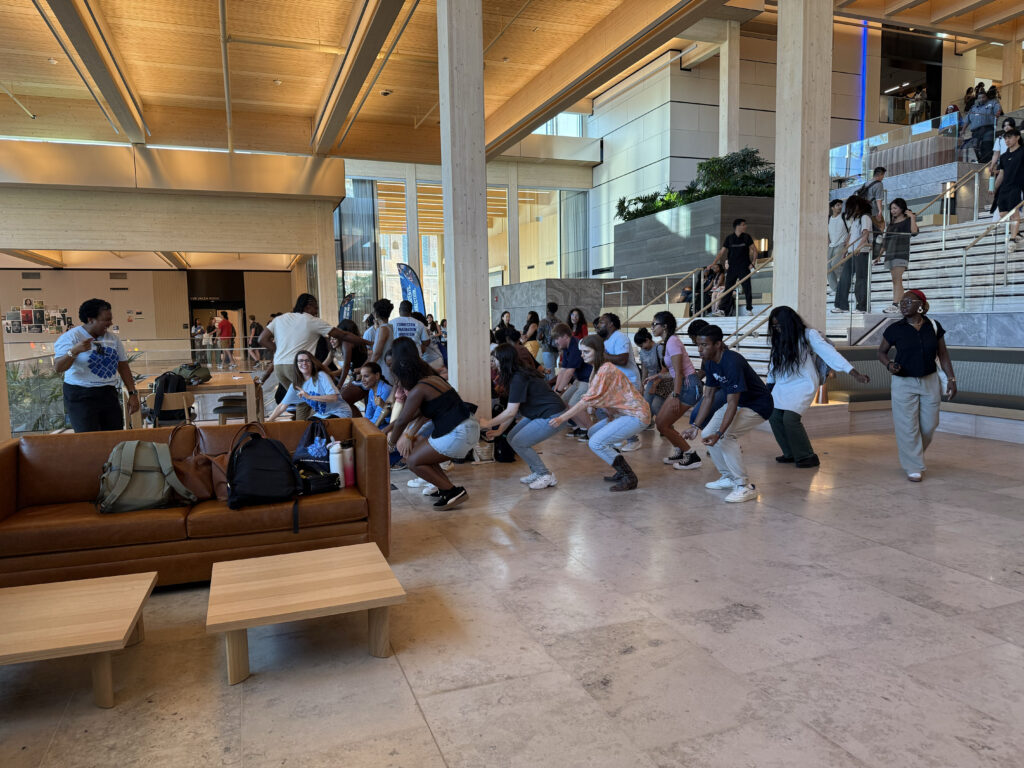 Students rarely experience universities in the way institutions organize themselves. Administrative divisions, reporting lines, and budget structures shape how campuses operate. They do not shape how students live their daily experience. Instead, students connect to their institution through moments: where they spend time between classes, where they build friendships, where they decompress, collaborate, or simply feel a sense of belonging. Campus recreation and student centers are two of the most influential environments shaping those experiences, advancing belonging in ways that extend beyond the classroom.
Among the most influential environments are recreation centers and student centers. Their purposes, rhythms, and patterns of engagement differ, yet both significantly shape how students interpret campus life and how connected they feel to their institution. In practice, they represent distinct environments advancing a shared institutional outcome: belonging.
To better understand how these environments function in practice, we spoke with two seasoned directors who lead campus recreation and student center operations at highly regarded universities. Their perspectives reveal how these spaces deliver distinct experiences while advancing shared organizational outcomes, including belonging, engagement, long-term student success, and institutional viability.
Spaces Students Choose: The Role of Campus Environments
One way to understand the impact of recreation and student centers is to look at how students use them. These are not transactional spaces. Students are not passing through simply to meet a requirement; they are choosing to visit them, often repeatedly, over the course of their academic careers.
Scott Vandermoon, CENTERS’ Director of Recreation at DePaul University, describes the recreation center as a space built around energy, interaction, and shared experience.
“We use the word ‘hub’ a lot,” Scott explains. “We want to be a hub for community and help students build connections, whether that’s through intramurals, club sports, or something more organic.”
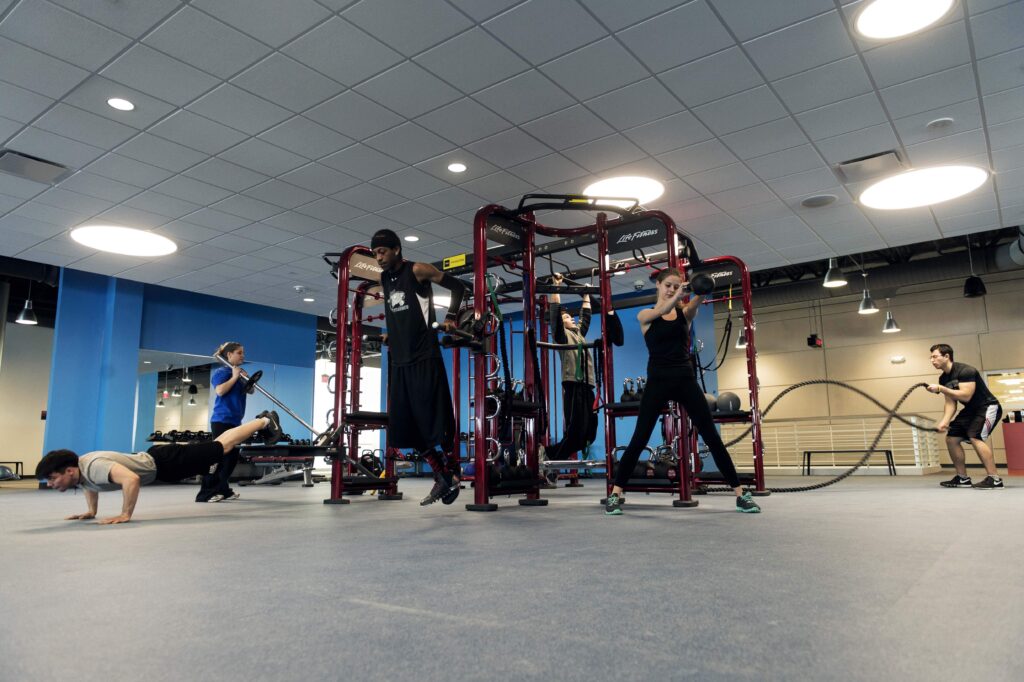
The recreation environment is intentionally social and dynamic. Movement, play, and activity create opportunities for spontaneous connection, stress relief, and peer interaction. Students may arrive with fitness in mind, but often leave having engaged in something broader, like informal competition or constructive social time.
Eve Esch, CENTERS’ Executive Director of the Bloomberg Student Center at Johns Hopkins University, describes an environment centered on flexibility, creativity, and choice.
“The purpose [of the Bloomberg Student Center] is to provide a sense of community and a place for students to gather,” Eve says. “Not to dictate how students should use it, but to create spaces that spark creativity, collaboration, and connection.”
By contrast, student centers operate at a different pace and serve a different function. They support quieter forms of engagement, reflection, collaboration, and creative work. Together, these two environments illustrate what higher education practitioners often describe as a campus “third place”: spaces that are neither academic nor residential, yet essential to how students experience belonging.
This distinction matters. National research consistently shows that students who participate in co-curricular activities and regularly engage in campus spaces beyond the classroom are more likely to remain enrolled and persist toward graduation. Data from the National Survey of Student Engagement (NSSE) highlights this point, showing that highly engaged students persist at rates 6–10% higher than their less engaged peers, depending on institution type. This reinforces the impact and value of the environments students choose to occupy.
Belonging Is Built into Operations
 Belonging does not emerge from a single program or initiative alone. It is shaped through daily operational decisions: how policies are enforced, how staff interact with students, how spaces are marketed, and how barriers to participation are addressed.
Scott draws a clear distinction between inclusion and belonging, one that directly informs how recreation operations are managed.
“Inclusion is what we do to make sure students feel welcome. Belonging is when students feel that this space is theirs, that they’re safe, comfortable, and that they belong here.”
Inclusion Versus Ownership
That philosophy influences everything from program pricing and access to staff training and communication. Recreation centers often serve large, diverse student populations, including students who may feel uncertain about entering fitness-oriented environments. Operational choices that reduce intimidation and lower barriers can determine whether a student returns or disengages.
As Scott notes, “If someone new to exercise comes in and the first thing we do is enforce a policy in a way that makes them feel unwelcome, they’re probably not coming back.”
Data as a Tool for Belonging
At the student center, Eve describes a parallel approach grounded in data and observation rather than assumption.
“We’re fortunate to have access to swipe data that helps us see who’s using the building and who isn’t. That allows us to be more intentional about outreach and programming, especially for student populations that may not naturally find their way into the space.”
While the contexts differ, the operational mindset is the same. Belonging is viewed as an outcome of intentional design and management, rather than a byproduct of programming alone. Research supports this approach. National studies have found that students reporting a stronger sense of belonging are 3–5% more likely to graduate on time and demonstrate higher academic confidence and motivation, underscoring the institutional value of environments that consistently reinforce connection.
Environment Shapes Behavior, and Behavior Informs Strategy
Students communicate what they value through how they use spaces on campus. Patterns of movement, duration of stay, and repeat use all provide insight into whether an environment is meeting student needs.
At Johns Hopkins, the Bloomberg Student Center’s early usage patterns revealed how students are gravitating toward collaborative and creative spaces, sometimes in ways that differed from original expectations.
“Study spaces and huddle rooms are seeing some of the highest demand for project and collaboration,” Eve explains. “Students are figuring it out. It may not be exactly what was anticipated at the beginning, but they’re showing us what they need.”
At DePaul, the recreation center reflects a different behavioral pattern. Usage ebbs and flows throughout the day, shifting from quieter mornings to afternoons defined by energy and interaction.
“You’ll hear music, see multiple activities happening at once, and feel that element of play,” Scott says. “That’s recreation. It gives students a chance to reset and reconnect.”
These differences are not incidental. Recreation centers often thrive on movement and social energy, while student centers provide space for focus, creativity, and informal collaboration. Together, they create complementary engagement pathways. Two different environments, one shared outcome: connection.
Adaptation as Strategy
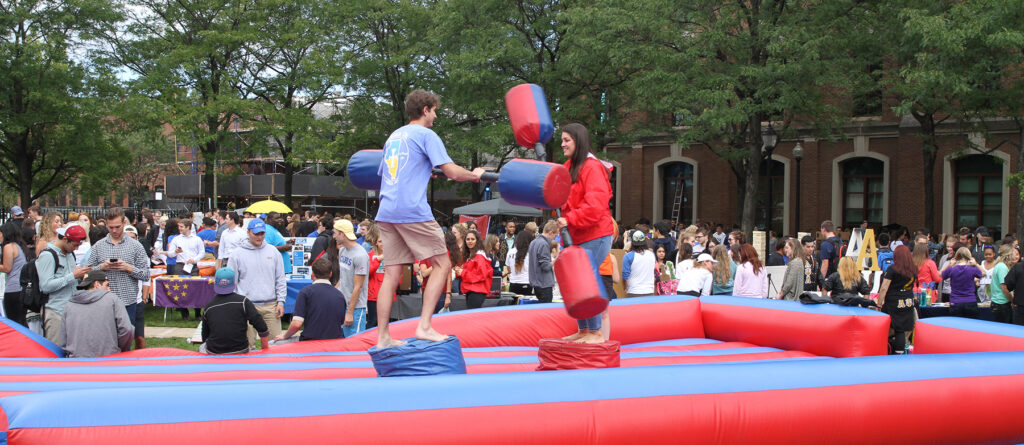 Listening to how students actually use these spaces allows operations to evolve. Adaptation becomes a strategic function, not a reaction. Facilities are adjusted, programming refined, and engagement strategies updated based on observed behavior rather than static assumptions.
From an institutional perspective, this responsiveness protects long-term asset value and supports student outcomes. Broad-based studies of campus recreation participation show that students who regularly use recreation facilities have retention rates 7–8% higher than non-users, even when controlling for demographic and academic factors. Similar research on engagement spaces highlights gains in satisfaction, sense of connection, and persistence.
Student Employment as a Multiplier
One of the most significant shared outcomes both Eve and Scott noted from their operations is career readiness from student employment. While the work environments differ, both serve as developmental platforms that extend impact well beyond the facility.
Development Beyond the Facility
Student staff often become ambassadors for campus culture. Through their roles, they develop leadership skills, communication abilities, and professional confidence that they carry into their academic work and future careers.
National research on student involvement supports this connection. Studies show that students who work on campus report higher GPAs, often by 0.3–0.5 points. These students are also 30% more likely to report feeling career-ready in skills such as communication, teamwork, and leadership. Employer research reinforces this alignment, with more than 70% citing these competencies as critical for early-career success.
“At the core of what we do is student development,” Scott says. “The paths may look different, but the goal is the same: helping students succeed beyond their time on campus.”
Eve echoes that perspective, noting that many student employees will pursue careers outside higher education, yet leave with transferable skills shaped by meaningful responsibility and engagement.
One Institutional Goal, Many Pathways
Recreation centers and student centers are different by design. Their environments, modes of engagement, and operational rhythms reflect distinct student needs. Those differences are precisely what make them effective.
At the same time, their shared focus on connection, belonging, and development creates opportunities for alignment and synergy. When viewed together, these spaces form a portfolio of experiences that engages a broader range of students and supports multiple pathways into campus life.
When managed intentionally, recreation and student center operations become more than facilities. In practice, whether led internally or in partnership with CENTERS, they function as strategic assets. As a result, they advance institutional mission, support enrollment and retention goals, and strengthen the overall student experience.
Those outcomes require more than good intentions. They depend on expertise, thoughtful management, and a deep understanding of how students experience campus daily.
Bringing Operational Intentionality to Campus Environments
For institutions seeking to strengthen alignment between campus environments and student outcomes, this work requires more than well-designed facilities. It depends on operational strategy, staffing philosophy, data informed adaptation, and a clear understanding of how students actually use space.
CENTERS partners with colleges and universities to manage recreation centers, student centers, and broader portfolios of campus life assets with that level of intentionality. By integrating operations, programming, student employment, and assessment, these environments can function not simply as facilities but as strategic assets that advance belonging, engagement, and institutional resilience.
About the Contributors
 Eve Esch is Executive Director of the Bloomberg Student Center at Johns Hopkins University, where she leads operations for the 150,000 square foot facility and oversees a team of professional and student staff. With nearly 25 years of experience in student center leadership, her work focuses on designing flexible, student-centered environments that foster connection, creativity, and belonging.
 Scott Vandermoon is Director of Recreation at DePaul University, where he oversees campus recreation operations, programming, and strategic planning at the Ray Meyer Fitness and Recreation Center. Since joining CENTERS in 2008, he has focused on building inclusive recreation environments that strengthen community, support student development, and advance institutional engagement goals.
Sources
National Survey of Student Engagement (NSSE). Annual Results and Engagement Indicators Reports.
National Student Clearinghouse Research Center. Persistence and Retention Reports.
Strayhorn, T. L. College Students’ Sense of Belonging.
American College Health Association (ACHA–NCHA). National College Health Assessment.
Journal of Student Affairs Research and Practice; ERIC database. Multi-institution studies on campus recreation participation and student outcomes.
National Association of Colleges and Employers (NACE). Career Readiness Competencies Reports.