
INSIGHTS
How Programming, Operations, and Design are Shaping the Next Generation of Campus Recreation
Campus recreation centers are changing, but not because one new amenity has replaced another. The most important shift is outcome-based programming. Recreation centers are being asked to support more of the student experience. That includes fitness, well-being, belonging, recovery, nutrition, technology, and daily campus life.
That shift is visible in the way students use these spaces. Traditional fitness areas still matter, but demand has expanded. Functional training, indoor turf, strength space, pickleball, small group training, yoga, barre, Pilates, and specialized studios all reflect a more varied approach to physical activity. Students are not looking for one version of recreation. They are looking for options that meet different needs, schedules, abilities, and comfort levels.
Health and well-being are also becoming more integrated into the recreation environment. Recovery equipment, stretch areas, massage chairs, sleep or nap spaces, sensory rooms, nutrition programs, healthy food concepts, and peer wellness education reflect a broader understanding of student support. Physical health, mental health, social connection, and academic success are increasingly viewed together.
These programmatic changes affect more than the building plan. They shape how the facility is staffed, scheduled, maintained, activated, and measured. They also influence adjacencies, technology, equipment, partnerships, locker rooms, food and beverage, outdoor space, and how students move through the building. To better understand how these shifts are influencing facility design, CENTERS invited architecture partners and industry voices from LPA Design Studios, Moody Nolan, RDG Planning & Design, SmithGroup, and Woolpert to share what they are seeing in new and renovated recreation centers.
Their observations point to a clear direction. The future recreation center is not simply a better gym. It is becoming part of the broader student experience outside the classroom.
Well-being Is Becoming Part of the Operating Model
Campus recreation has always supported physical activity. What is changing is the range of outcomes institutions now expect these facilities to support.
Jennifer Rittler of Moody Nolan described that broader role directly. “The future of recreation extends beyond fitness equipment and gymnasiums to include mental health, recovery, social connection, outdoor recreation, and holistic well-being.”
Brad Rodenburg of RDG Planning & Design summarized the shift in more direct terms. “All about overall health and well-being!”
This is more than a space trend. It is an operating shift. As recreation centers become more closely tied to health, counseling, wellness education, nutrition, recovery, and student support, the planning process has to account for more than square footage. It has to consider who will deliver programs, how students will access services, where partnerships belong, and how the facility will support both structured and self-directed use.
That is especially important as well-being becomes part of daily student life. A relaxation room, recovery station, peer education program, smoothie concept, wellness app, or food pantry connection may not look like traditional recreation. Each one still affects how the facility is planned, staffed, promoted, and sustained.
Program Trends Are Reshaping Recreation Facilities
The changing program mix is also reshaping the physical plan. Fitness is not disappearing. It is becoming more varied, more specialized, and more experiential.
Clint Menefee of SmithGroup pointed to one of the most visible shifts. “Strength training with barbells and racks, and open functional fitness space are all big drivers of space today.”
Rodenburg made a similar observation about functional fitness. “Functional Fitness space has become increasingly popular, due to the fact that it isn’t necessarily programmed space but can be used for a variety of exercises.”
Those spaces matter because they support flexibility in use, not only flexibility in design. Indoor turf can serve training, small group instruction, athletic preparation, informal recreation, and pop up programming. Specialized studios can support yoga, barre, Pilates, mobility, recovery, and mindfulness. Outdoor fields with turf and lights can extend use and support club sports, intramurals, camps, and community activity.
Andrew Pack of Woolpert described the same expansion in facility types. “Today, the design is far more diverse, often including wellness suites, recovery spaces, group fitness studios, esports lounges, collaborative study areas, and flexible event spaces.”
Technology is part of the same shift. Mobile credentials, cashless transactions, wearable technology, on demand workouts, virtual appointments, and program registration tools affect how students access and experience the facility. These are not just convenience features. They influence staffing, service expectations, data, and engagement.
Winston Bao of LPA Design Studios connected these decisions back to programming. “It starts with the Program and providing the clarity needed to understand utilization, trends, value and spatial requirements.” He added, “The counterbalance to that is defining the ‘Why?’”
That clarity matters. Without it, campuses risk planning around a list of attractive ideas instead of a coherent student experience.
Recreation Centers Are Becoming Campus Experience Hubs
The architects also described a broader shift in how campuses think about recreation as part of student life.
Rittler wrote, “Campus recreation has shifted from being viewed as an amenity to being recognized as a critical component of student success.”
Pack framed the shift around use and experience. “Students increasingly see recreation centers not just as places to exercise, but as destinations that support fitness, community, and overall well-being.”
Bao connected that evolution to the blending of once siloed campus functions. “Often these environments are bridging the need to blend fitness, wellness, health and student life into a fusion environment that offers intersectional experiences for students to integrate lifelong learning into their busy lives.”
That fusion is increasingly visible in the way campuses are thinking about recreation centers. The lines between recreation center, student center, wellness hub, esports venue, club sports home, commuter support space, and informal gathering place are becoming less rigid. In some cases, the building may also connect to health services, counseling, nutrition, food security resources, inclusive locker rooms, outdoor recreation, or community programming
Pack made the point clearly. “The most successful facilities now operate as destinations that foster connection and community, not simply places to exercise.”
This is where the programmatic and architectural trends meet. The operating reality is changing first. Design has to respond.
Flexibility Needs a Purpose
Because student needs are changing, recreation centers cannot be planned around a fixed list of programs. Current demand may point toward more strength training, recovery space, esports, outdoor recreation, pickleball, leisure aquatics, or yoga and movement studios. Those trends are useful signals. They should not become the only planning logic.
Menefee captured the larger design challenge. “Flexibility over time and spatial resiliency are key.”
That is especially important because recreation facilities are long-term campus assets. Student interests, technology, wellness expectations, and campus demographics will continue to shift. A building planned too tightly around today’s preferences may feel outdated long before the institution is ready for another major capital project.
Rittler underscored the same issue. “The lesson is simple: recreation programming evolves faster than buildings.”
But flexibility still requires intention. Rodenburg cautioned that “Multi-purpose sometimes becomes multi-useless,” a useful reminder that adaptability should not come at the expense of purpose.
The strongest facilities are not the ones that try to be everything at once. They are the ones planned with enough clarity to serve today’s students and enough flexibility to evolve as needs change. That balance depends on programming, operations, and design working together from the beginning.
Planning Connects Vision, Design, and Operations
For higher education leaders, the planning takeaway is clear. The future recreation center should not begin with a menu of amenities. It should begin with the students it is meant to serve, the outcomes the institution is trying to support, and how the facility will work in practice.
This is where the planning and operations cycle matters. A recreation center may be conceived as a bold student life investment, but its value depends on how well that vision translates into daily use. A facility that promises integrated well-being has to determine how services connect. A building that includes recovery, food, technology, or wellness education has to account for staffing, supervision, hours, training, partnerships, and measurement. A center designed for belonging has to be activated in ways that help students return.
Rittler made the connection directly. “Great recreation facilities are planned in close partnership with operators because operational efficiency directly impacts the student experience, operating budget, and the long-term success of the building.”
Woolpert pointed to the same long-term operating implications. “From our experiences and observations, the design decisions with the greatest long-term impact on operations and staffing are those tied to efficiency, flexibility, visibility, and maintainability.”
Menefee added another practical consideration. “I would say the durability of your activity spaces is a big design decision.”
That work starts early. Rittler advises institutions to “Start with a feasibility study.” Menefee made a similar point, recommending that campuses “Engage a reputable firm in a feasibility study or Departmental Master Plan before starting design.” Brad Rodenburg of RDG Planning & Design put the same idea in direct terms. “Listen and invest in listening to as many different user types as possible!”
The larger point is not that planning can predict every future use. It is that planning creates the framework for adaptation. Programming impacts planning. Planning shapes design. Design affects operations. Operations determine whether the facility can continue delivering value as student needs change.
Future Readiness Starts with the Students Still to Come
The architects’ strongest common thread is that campuses are not designing for a fixed endpoint. Rittler framed it as a charge to “Design for the students who haven’t arrived yet.”
Rodenburg offered a similar caution. “Don’t plan for the NOW, plan for 10, 15, 25 years from now.”
For institutions considering renovation, expansion, or new construction, future readiness is not about predicting every program or preference that may emerge. It is about creating a facility with the flexibility to keep serving students as campus life changes.
That is the opportunity for the next generation of recreation centers. Done well, they are not just places to exercise. They become one of the clearest expressions of how a campus supports students outside the classroom.
About the Contributors
Winston Bao, CID, LEED AP, Design Director, Associate, Interiors & Programming, LPA Design Studios
Jennifer Rittler, AIA, Associate Principal, Moody Nolan
Brad Rodenburg, AIA, LEED AP BD+C, WELL AP, Senior Partner, RDG Planning & Design
Clint Menefee, AIA, LEED AP BD+C, Vice President | Studio Leader, SmithGroup
Andrew R. Pack, PLA, ASLA, Vice President, Woolpert
Image Credit
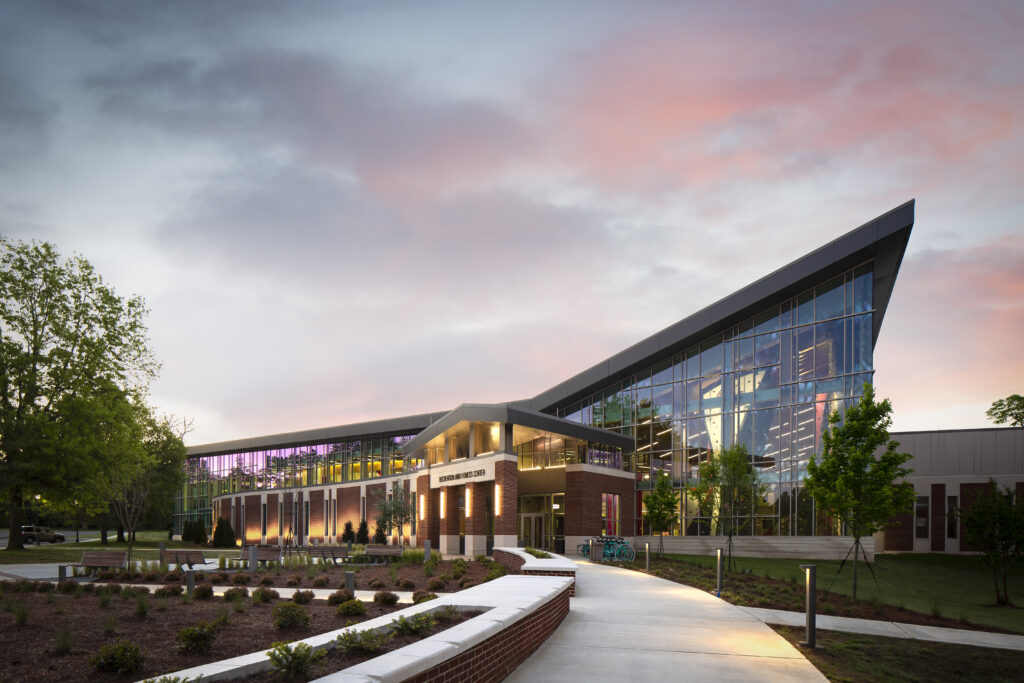
Jacksonville State University Fitness Center, managed by CENTERS in Jacksonville, Alabama, as photographed for Turner Construction and Moody Nolan Architects by Tommy Daspit. See more of his work at http://tommydaspit.com
 About the Author