
CENTERS IN ACTION
How Longwood University uses local market knowledge and national reach to choose the right events, build audiences, and create repeatable venue value.
With insights from Craig Stover, General Manager of the Joan Perry Brock Center
A nationally recognized act generates attention, creates campus buzz, and gives university leaders a marquee moment. But attention does not guarantee ticket demand. In a small market, getting the event wrong can mean more than disappointing ticket sales. It can create financial losses, strain staffing and operations, disrupt the venue’s primary mission, and affect confidence in future programming.
At Longwood University, CENTERS manages the 3,000-seat Joan Perry Brock Center (JPB), home of Lancer men’s and women’s basketball. The team evaluates external events against the arena’s primary purpose, the audience Longwood can realistically reach, and the financial exposure the institution should accept. CENTERS’ national reach expands the opportunities Longwood can consider. The locally embedded JPB team determines which events fit the market, calendar, and institution.
Why Small-Market Campus Arena Events Carry Greater Risk
An open date is not necessarily a workable event date. Basketball schedules, practices, building conversions and staffing capacity determine when the JPB can host an outside event and quickly return the arena to its primary use. The financial equation is equally constrained. Artist guarantees, production, labor, and marketing costs can remain substantial regardless of venue size, while a smaller arena has fewer tickets available to recover them. Together, those constraints make audience fit and pricing especially important.
Audience intelligence is therefore central to risk management. “You’ve got to know your audience,” says Craig Stover, General Manager of the Joan Perry Brock Center. For the JPB, that audience includes students, alumni, local residents, families and regional visitors. Their interests, price sensitivity, and willingness to travel shape which opportunities can become viable events.
How Local Market Knowledge Revealed Demand for Oliver Anthony
The JPB team applied that knowledge shortly after the arena opened. Oliver Anthony’s rapid national rise created broad interest, but his connection to Central Virginia made the opportunity especially relevant to Farmville and the surrounding region. “Local connection was key. Timing was everything,” Stover says.
Tickets sold out in less than an hour. Buyers represented more than 90 ZIP codes and came from as far away as California, Hawaii, and Toronto. Artist relevance, regional interest, timing and venue availability aligned. Local knowledge helped the team recognize demand that population measures alone might have missed.
How Longwood Expanded the Audience for Spring Weekend
Longwood’s Spring Weekend concert required a different calculation. The event is an established student tradition, so a new approach had to preserve its purpose while managing the cost of presenting a larger artist. University leaders provided institutional context, students identified artists who resonated with their peers, and the JPB team added market research, financial analysis, and operating expertise.
That process led to Yung Gravy. Students selected the artist from a shortlist, giving the team an early indicator of campus demand. The JPB team used Pollstar and other industry information to assess performance history, comparable venues, pricing, and demand beyond students. Longwood also moved the concert from its traditional outdoor setting into the arena and introduced public ticket sales.
Longwood sold 1,176 tickets: 538 to students and 638 to the general public. Approximately $22,000 in ticket revenue offset nearly all of the university’s investment. The event still carried risk, but the decision rested on stronger evidence and a plan to build demand across student and public audiences.
How Repeatable Events Strengthen Small-Market Venue Programming
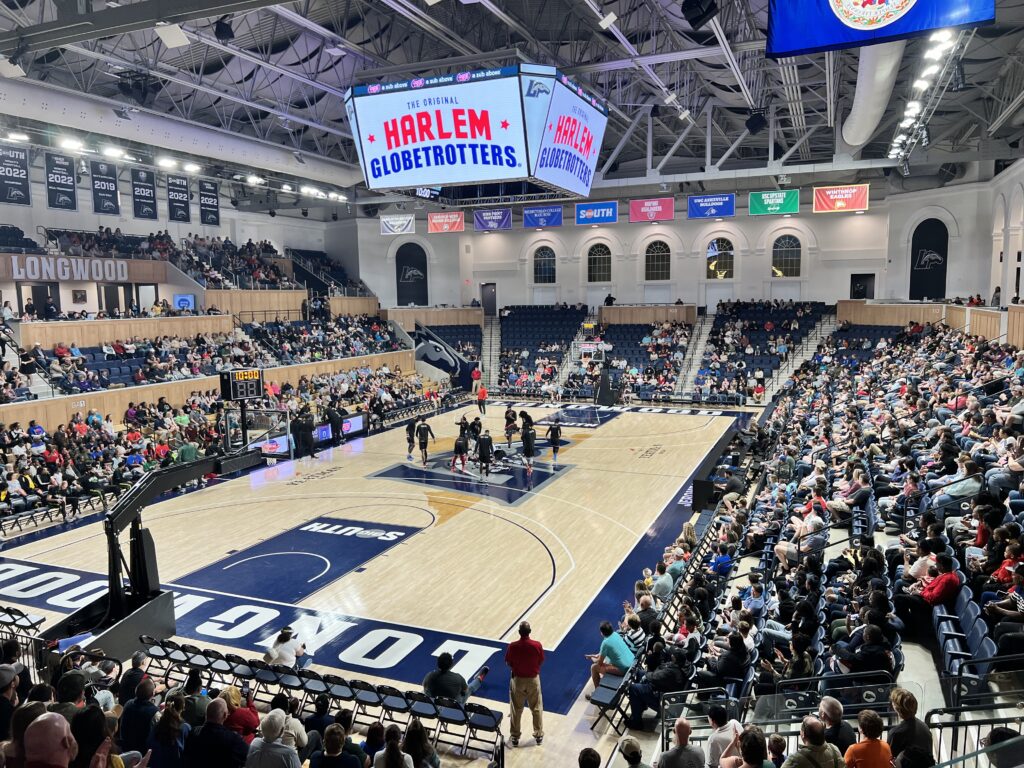
The Harlem Globetrotters demonstrate a third kind of market fit. Their touring model works across venue sizes and smaller communities while delivering a nationally recognized experience. Accessible pricing and the experience of visiting Farmville have also helped the JPB attract patrons from larger markets such as Richmond.
The Globetrotters will return in 2027 for a fourth consecutive year. That continuity reflects not only repeatable regional demand, but also the touring organization’s confidence in CENTERS-operated venues to deliver a strong experience, from marketing and production to a professional touring experience consistent with larger-market venues. For Longwood, the relationship brings an established national act to a newer market venue, strengthening its credibility while deepening its community reach.
How CENTERS Combines National Reach with Local Venue Knowledge
Each event required a different decision, but the operating approach remained consistent. CENTERS’ industry relationships, visibility into touring opportunities, and comparative experience broadened the options Longwood could consider. Consistent delivery across the CENTERS portfolio builds trust with touring organizations. That trust can help CENTERS route appropriate opportunities to venues such as the JPB and the Sonnentag Center at the University of Wisconsin–Eau Claire. The embedded JPB team then evaluates each opportunity against local audience behavior, competing events, building demands, and institutional priorities.
A booking specialist can help identify and secure entertainment, but that addresses only one part of the decision. CENTERS remains accountable for how each event works within the full operating life of the asset, including production, marketing, ticketing, finances, maintenance, and the return to basketball use. The goal is not only to execute a successful night, but also to understand what the event contributes and whether that value can be created again.
How Smarter Event Risk Creates Long-Term Value for Longwood
The biggest name on the marquee is not necessarily the safest or most valuable choice. The better opportunity is one with a reachable audience, workable economics, and a purpose that justifies the exposure. For Longwood, smarter risk supports an arena program that serves Lancer basketball, reinforces student traditions, attracts regional audiences, and creates additional institutional value without losing sight of the mission it was built to serve. For university leaders, the question should not simply be, “Can we book this act?” The better questions are: Who will attend? What will it cost to deliver? What value will it create? What does it displace? And can the institution absorb the downside if demand falls short?
 About the Contributor