
CENTERS IN ACTION
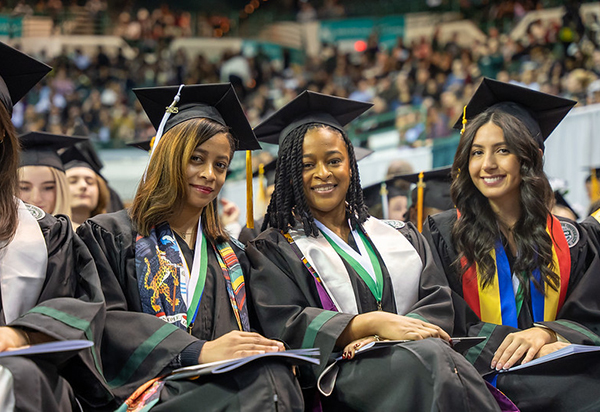
At Cleveland State University (CSU), CENTERS analyzed commencement operations to identify efficiencies while preserving the traditions and recognition that make the day meaningful.
Commencement is unlike almost any other event on campus. For graduates, families, and friends, it represents the culmination of years of work, sacrifice, and achievement. For faculty and campus leaders, it is one of the institution’s most visible academic traditions. For the teams responsible for producing it, commencement is also an extraordinarily complex live event involving thousands of people, multiple departments, hundreds of behind-the-scenes decisions, and months of coordination.
At CSU, the CENTERS team spent multiple commencement cycles studying how those decisions shaped the ceremony. Developing recommendations required understanding the university’s academic priorities and working with the departments whose responsibilities would be affected by each proposed change
Learn Before You Optimize
Commencement brings together departments with different responsibilities for the same event. Academic leaders oversee the formal exercise and graduate recognition. The registrar, college representatives, venue staff, marketing, campus safety, and other partners each contribute to how graduates and guests experience the day. Understanding why a practice exists requires listening to the people responsible for it.
Cleveland State directed the team to keep the existing ceremony largely unchanged. That allowed CENTERS to observe how those responsibilities came together, establish a baseline, and understand institutional priorities. The team could then bring specific recommendations to the commencement committee with a clearer understanding of what each change would mean for the departments involved.
Reviewing the Ceremony Timing
CENTERS’ Conference and Event Services team supports the university’s commencement committee through project management, scheduling, vendor confirmation, run-of-show development, volunteer assignments, payroll, budgeting, equipment coordination, and other operational responsibilities.
For Spring 2026, the team reconstructed the run of show using actual timestamps rather than relying solely on impressions or anecdotal feedback. The morning ceremony lasted approximately two hours and 54 minutes, while the afternoon ceremony lasted just over three hours.
Using that analysis and benchmarking with other universities, CENTERS developed recommendations projected to reduce the formal program by approximately 20%. If implemented, the changes could reduce the length of the ceremonies to under two and a half hours.
Preserve Tradition. Question Process.
Formal academic processionals, opening and closing declarations, graduate recognition, degree conferral, academic honors, and the Alma Mater all contribute to the identity and significance of commencement. The team evaluated each element according to its purpose and its contribution to the graduate and guest experience.
CENTERS recommended beginning graduate processionals 30 minutes before the official ceremony starts and faculty processionals five minutes before it. Guest communications would encourage families wanting to watch the processionals to arrive earlier. This could also help spread guest arrivals over a longer period of time.
Additional recommendations included consolidating opening acknowledgments, shortening selected remarks, and reducing repetitive introductions and lectern transitions. These adjustments could improve pacing while retaining the ceremony’s formal elements.
Finding Efficiency Where It Matters Most
The team’s preliminary analysis indicated that a more coordinated name-reading and stage-crossing process could reduce the afternoon ceremony by up to an additional 73 minutes. Achieving that pace for later ceremonies would require tighter coordination of name announcements, graduate movement, photography, and diploma cover distribution while preserving individual recognition for every graduate.
Recommendations included establishing the intended photo opportunity in the photographer’s briefing and run of show and refining the diploma cover handoff, so every graduate receives one without interrupting the procession. These recommendations would help each graduate receive consistent recognition while reducing unnecessary pauses and inconsistent pacing.
The Value of an Embedded Campus Partner
CENTERS’ role required working across responsibilities that remained distributed throughout the university. Moving a processional earlier, for example, would affect graduate assembly, faculty arrival, guest communications, and venue readiness. Changes to stage recognition would require agreement on the sequence of name announcements, photography, and diploma cover distribution. Each recommendation depended on coordination among the people responsible for those activities.
The on-campus team’s knowledge of Cleveland State’s facilities, traditions, and working relationships helped it develop recommendations suited to the institution. CENTERS also brought event management experience and benchmarking from other universities to inform the committee’s discussions. CSU could weigh those recommendations against its academic priorities and determine which changes fit its commencement.
Planning Future Ceremonies
CENTERS’ review provided CSU insight and detailed recommendations to guide future commencement planning. The analysis also made the implications of each recommendation clearer, giving the committee a way to weigh potential time savings alongside academic traditions, graduate recognition, and the work required across departments. That shared understanding provides a foundation for decisions about how future ceremonies should operate.
 About the Author