
INSIGHTS
Why campus recreation investments must begin with outcomes, operations, and long-term stewardship.
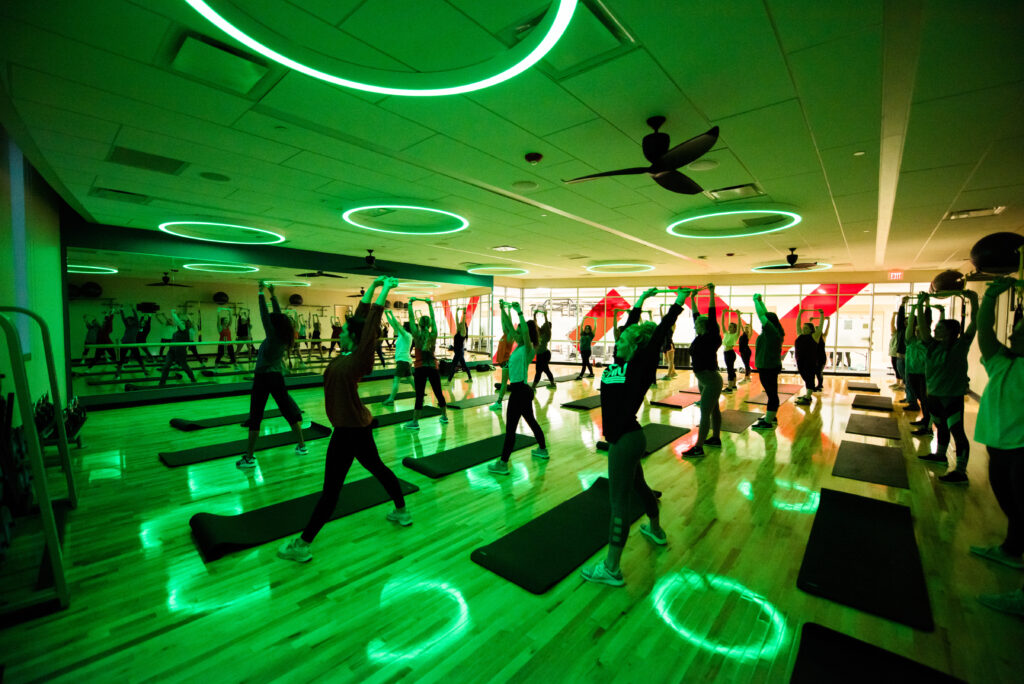
Recreation centers from the last major wave of campus investment in the late 1990s and early 2000s are now reaching the point where campuses must consider renovation, expansion, or replacement. Those facilities helped define the modern campus recreation experience. They also gave campuses a visible way to invest in student life outside the classroom by creating dedicated space for fitness, aquatics, intramurals, outdoor adventure, wellness programming, and student activity.
Many of those buildings served their institutions well. But they were built for a different moment in higher education.
Today, the pressure on campus recreation is broader. Students are bringing different expectations around wellbeing, belonging, flexibility, and access. Institutions are managing tighter financial realities, more scrutiny around student fees, and long-term enrollment pressure. The long-anticipated demographic cliff has arrived, sharpening the need for institutions to understand the value, cost, and long-term purpose of every campus asset. (Western Interstate Commission for Higher Education, 2024)
The next investment in campus recreation should start with the role the facility is expected to play. That means defining how it supports the institution’s mission, what outcomes it should advance, and what operating and financial model will sustain it over time.
The Next Reinvestment Cycle
Many of those facilities, however, were designed around a more compartmentalized model. Fitness, weight training, court sports, aquatics, outdoor adventure, athletics, wellness, and student gathering often occupied distinct zones. That approach made sense for the time. But it did not always anticipate how student needs, staffing models, supervision requirements, access control, and shared-use expectations would evolve. The building may have solved the immediate space problem, but it was not always designed as an adaptable operating platform.
Today, institutions are asking more of these facilities. A recreation center may be expected to support health services, counseling, employee wellness, student life, dining, academic support, community engagement, or broader campus wellbeing goals. It may also be part of a larger strategy for recruitment, retention, belonging, and student success.
For campus leaders, the opportunity is not simply to modernize recreation space. It is to define the strategic value of a major campus asset before design choices become permanent operating conditions.
From Recreation Space to Strategic Asset
Campus recreation has moved well beyond the idea of a place where students work out. Recreation centers are often among the most active student-facing buildings on campus, supporting routine, connection, employment, programs, and a sense of belonging. Research has connected student recreation center involvement with belonging and intent to remain at the university. (Miller and Croft, 2022) That does not mean a recreation center alone drives retention. It means these facilities are part of a larger out-of-classroom experience that helps students connect to the institution.
On some campuses, the recreation center may function as a primary “third place.” On others, that role is shared with a student union, library, dining facility, residence hall, outdoor space, or other campus center.
That overlap is not inherently inefficient. In fact, purposeful redundancy can be valuable when it gives students more convenient and repeated opportunities to engage. The issue is not whether multiple campus assets support belonging, wellbeing, or connection. The issue is whether the institution understands how those assets work together.
A campus does not need every building to do everything. It does need a clear strategy for how major student-facing spaces support the out-of-classroom experience. If the recreation center is expected to advance wellbeing, belonging, recruitment, retention, employee wellness, community access, or revenue generation, those expectations should influence the program, design, staffing model, budget, and measures of success.
Integration Is Harder Than Co-Location
One of the clearest trends in campus planning is the desire to bring recreation, wellness, counseling, health services, employee wellness, dining, student life, and academic support into closer relationships. The instinct is understandable. Students do not experience campus through the organizational chart institutions use to manage services. When the experience is fragmented, students feel the gaps.
It is tempting to think of integration as a design outcome. If related services are placed in the same building, the experience should become more connected. In practice, proximity is only the beginning. A facility can put recreation, wellness, and health services under one roof and still leave them functioning as separate departments with separate budgets, staffing models, access rules, data systems, and definitions of success.
Governance Has to Be Designed, Too
Some separation is necessary. Counseling and health services carry privacy and confidentiality obligations that cannot be blurred for convenience. Employee wellness may serve a different population than student recreation. Athletics, student affairs, auxiliary services, academic partners, and community users may all have legitimate interests in the same asset. The challenge is not to force those functions into one structure. The challenge is to define how they will work together before the building opens.
That requires clarity around governance, staffing, access, scheduling, budget responsibility, shared spaces, and decision-making authority. It also requires an honest look at where administrative duplication can be reduced without weakening the outcomes the facility was built to support. Integration should create a better experience for students and a more efficient model for the institution. But proximity does not create integration. Those outcomes depend on intentional operating decisions made before the building opens.
The Financial Model Has to Match the Promise
Securing capital funding is only one part of the responsibility. If the institution expects a recreation center to serve as a strategic campus asset, it also needs a clear model for operating, maintaining, refreshing, and sustaining it over time.
That model is under pressure. For decades, many recreation centers were supported by student fee structures based on a more traditional view of campus life. Those models still matter, but enrollment shifts, online and hybrid learning, affordability concerns, and changing expectations around access and value are testing the assumptions behind them.
Opening Day Is Not the Finish Line
This is where financial stewardship and student experience become inseparable. A recreation center may be approved because of what it promises to deliver. That may include stronger engagement, healthier students, improved recruitment, greater retention, expanded wellness, or broader community access. After opening day, those promises become operating responsibilities. Staffing, hours of operation, equipment replacement, custodial service, technology, mechanical systems, reserves, and lifecycle maintenance all determine whether the facility can continue delivering the experience envisioned during planning.
When the operating model is underfunded, the effects eventually become visible. Hours are reduced, programs are limited, equipment ages, maintenance is deferred, staff are stretched, and the experience begins to drift from the original promise. These are not just budget issues. They are mission issues because they affect the institution’s ability to deliver on the outcomes the facility was built to support.
Some institutions will need to think differently about revenue and access. Affiliates, community members, rentals, summer programs, camps, events, and other user groups may all have a role, depending on the campus and the facility. Those decisions should be made intentionally, not only as gap-fillers after the budget falls short.
The financial model has to match the promise of the facility. That means planning for the full life of the asset, not just the capital project.
Design Decisions Become Operating Realities
The operating life of a recreation center is shaped by decisions that are often made long before the building opens. During design, those decisions may appear to be about layout, finishes, adjacencies, or visual impact. Over time, they become decisions about staffing, supervision, maintenance, risk, access, and the quality of the daily user experience.
That is why the operating perspective needs to be present early. The purpose is not to limit design ambition or reduce every decision to ease of maintenance. Strong design matters. But design decisions should be made with a clear understanding of the operating conditions they create.
Sight lines influence supervision and risk. Locker room placement affects aquatics operations. The relationship between an outdoor adventure center and a climbing wall can shape staffing, programming, and participation. A yoga room located next to a high-energy cycling studio may seem efficient in plan, but the sound transfer can compromise both experiences. Access points, emergency stairwells, keying schedules, storage, and locker room doors all affect how the building is staffed and managed each day.
Small Details Become Operating Realities
Maintenance requires the same discipline. Elevated tracks, high windows, and other architectural features may contribute to the character of the building, but they also create long-term cleaning and maintenance obligations. Informal lounge space may be intended to support belonging, but if it is placed behind controlled access, it may not serve the students who need that gathering space most.
These are not minor details. They are the points where institutional goals meet operating reality. A facility may be designed to support wellbeing, belonging, access, and engagement, but those outcomes depend on how well the building functions in daily use.
The goal is not to choose function over form in every instance. Institutions will sometimes make a deliberate decision to prioritize a particular design expression, and that can be appropriate. The important thing is to understand the tradeoff before the decision is made. When the operating consequence is visible, it can be planned for. When it is discovered after opening day, it becomes a recurring cost, a service limitation, or a constraint on the student experience.
 Trends Need to Be Tested Against Context
Campus recreation trends should not be evaluated in isolation. Their value depends on how well they align with student demand, campus culture, staffing capacity, programming support, and the long-term financial model for the facility.
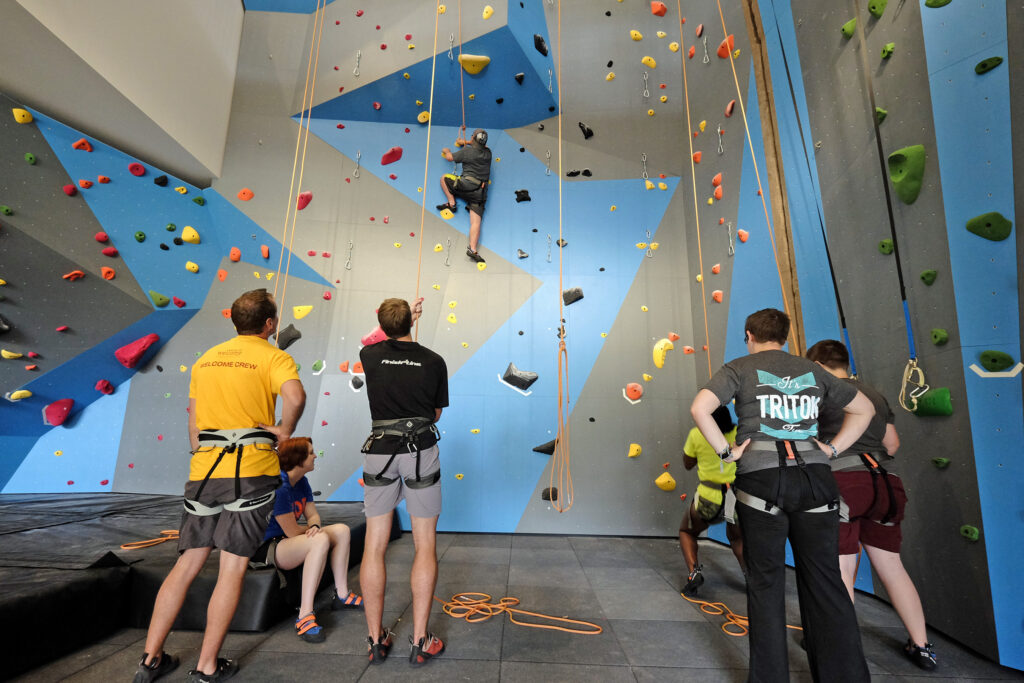
A climbing wall is a useful example. On one campus, it may become a signature experience because there is student leadership, outdoor recreation programming, trained staff, and a culture that will sustain participation. On another campus, the same feature may be underused because the operating and programming structure does not exist to support it. The trend is not the issue. The context determines whether the investment performs.
Fitness spaces require the same discipline. The traditional cardio row served an important purpose for many years, but student demand has shifted toward strength training, functional fitness, interval training, and more varied forms of personal fitness. Recent coverage of campus recreation renovations shows institutions repurposing older spaces to respond to changing fitness demand, including greater emphasis on strength, resistance training, and flexible use. (Campus Rec Magazine, 2026) Other reporting has also pointed to the growing emphasis on strength training and weight room upgrades as institutions respond to student demand. (Athletic Business, 2025)
That shift affects more than equipment selection. It influences square footage, replacement cycles, supervision, flooring, storage, circulation, risk management, and the way students learn to exercise safely and confidently. A facility designed around current demand still has to remain adaptable as preferences, training methods, and equipment needs continue to evolve.
That is why data and context matter. A recreation center will outlast several cycles of student preference, equipment innovation, and program demand. The strongest decisions are not made by following trends or rejecting them outright. They are made by understanding which investments the institution can support over time and how those investments advance the intended role of the facility.
Start With Intended Outcomes
For campuses considering a major renovation, expansion, or replacement, the most important work begins before the program is finalized. Leaders need a clear definition of what the facility is expected to accomplish for the institution and how success will be measured after opening day. Without that clarity, the project can become a collection of desired spaces rather than a coherent campus asset.
The most successful projects are not driven by amenities alone. They are grounded in institutional outcomes. For some campuses, that may mean creating a healthier student body. For others, it may mean strengthening belonging, improving retention, supporting employee wellness, consolidating services, activating underused space, or creating a new center of campus life. The goal may vary by institution, but it should be stated early and tested consistently against design, budget, operations, and long-term sustainability.
That is the opportunity in this next reinvestment cycle. Campuses are not simply deciding how to update aging recreation centers. They are deciding what role these facilities should play in the future of the student experience. The institutions that get the most value from that investment will be the ones that align the facility’s purpose, operating model, and financial strategy from the beginning.
Sources & Further Reading
- Western Interstate Commission for Higher Education. (2024). Knocking at the College Door: Projections of High School Graduates, 11th Edition. https://www.wiche.edu/knocking/
- Miller, J. J., & Croft, J. C. (2022). The Influence of University Recreation Centers on Student Return and Retention During COVID-19. Recreational Sports Journal, 46(2). https://doi.org/10.1177/15588661221097701
Accessible version: https://pmc.ncbi.nlm.nih.gov/articles/PMC9047664/ - Athletic Business. (2025, October 21). How Campus Rec Centers are Renovating their Weight Rooms to Meet Student Demand. https://www.athleticbusiness.com/facilities/fitness/article/15755267/how-campus-rec-centers-are-renovating-their-weight-rooms-to-meet-student-demand
- Campus Rec Magazine. (2026, February 19). Recent Campus Rec Renovations Reflect Shifting Student Fitness Demand. https://campusrecmag.com/recent-campus-rec-renovations-reflect-shifting-student-fitness-demand/
 About the Author