At Cleveland State University, commencement shows how trusted coordination and structured planning turn a complex institutional milestone into a seamless experience.
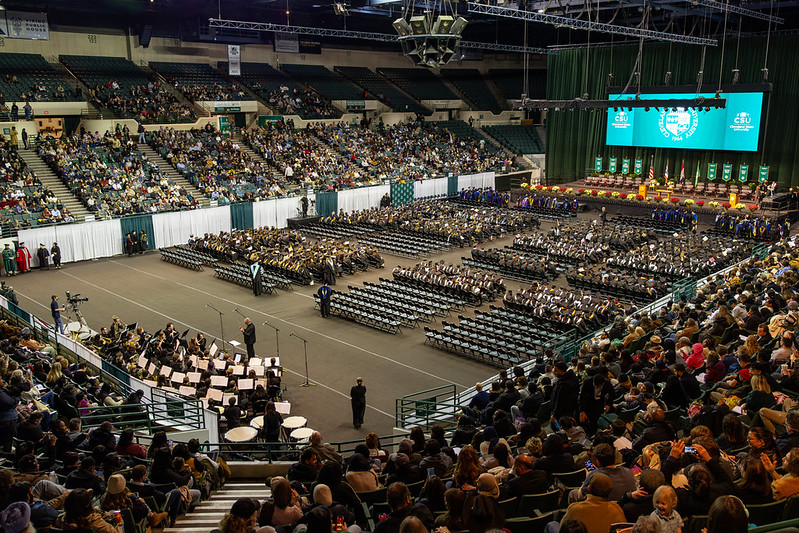
Photo courtesy of Cleveland State University
Commencement is one of the most visible and meaningful moments of the academic year. For graduates and families, it is a celebration. Behind the scenes, it is also a complex campus operation shaped by planning, trust, timing, and coordination across university partners.
In many ways, CSU’s commencement offers a clear example of the same principles CENTERS brings to campus operations across its managed locations: distributed responsibility, intentional coordination, and execution aligned to the institution’s mission and experience.
For most students and families, commencement is a defining milestone. It marks the end of one chapter and the beginning of another, and the experience itself is expected to feel celebratory, well-orchestrated, and memorable. What is less visible is the level of coordination required to make that moment possible.
Well before the ceremony takes place, teams across campus are already working through timelines, responsibilities, and dependencies that span multiple departments. Each group brings a different piece of the process, and those pieces must come together with precision. The result is not just a well-run event, but a coordinated system that reflects how effectively an institution can align people, processes, and priorities around a shared outcome.
At CSU, Katie Blodorn, Assistant Director of Business Development and University Events, serves as the primary Conference and Event Services coordinator for commencement. In that role, she brings a project management lens to one of the university’s highest visibility events, connecting campus partners, timelines, and shared responsibilities through a structured, collaborative approach that begins months in advance.
Her work behind commencement highlights a broader idea: the same principles that support strong day-to-day operations also apply to moments of peak visibility.
1. Graduation Runs on Trust, Not Just Timelines
It is easy to assume that graduation planning is primarily about managing logistics. Schedules, checklists, and detailed timelines are all essential, but they are only effective when supported by a strong network of collaboration across campus.
Each department involved in commencement plays a distinct role. Marketing manages communications and messaging. The registrar’s office oversees student data and records. Venue teams coordinate space, setup, and flow. Academic leadership is responsible for ceremony-specific elements tied to each college. None of these pieces operates in isolation, and no single person is responsible for executing all of them.
In this environment, coordination depends on clarity and consistency. As Katie explains, her role centers on establishing that structure early and maintaining it throughout the process:
“I immediately come to the role of project management… I host meetings beginning four months out… they have weekly and daily tasks leading up to the event, and they report back so that all people can hear and ask questions.”
Regular meetings and shared timetables create visibility across teams, but more importantly, they create accountability. Each group understands what is expected, when it is due, and how it connects to the broader effort. Over time, that consistency builds trust in the process itself. Teams are able to focus on delivering their responsibilities with confidence that other pieces are moving forward as planned.
This dynamic is what allows a complex, multi-department effort to function smoothly. The timeline provides structure, but trust in that structure is what allows it to work.
2. The Goal Is to Make Complexity Invisible

Photo courtesy of Cleveland State University
For the audience, graduation should feel simple. Names are called, families celebrate, and the ceremony moves forward without interruption. That sense of ease is not accidental. It is the result of careful planning designed to absorb complexity long before the event begins.
Behind the scenes, that complexity shows up in dozens of small but interconnected decisions. Seating arrangements must align with processional flow. Scripts must match timing cues for speakers, musicians, and stage movement. Student information must be accurate and delivered at exactly the right moment. Each of these elements carries its own level of detail, but none of them can be treated in isolation.
What distinguishes a well-executed ceremony is not the absence of complexity, but the ability to manage it in a way that keeps it out of view. The same idea applies to campus centers, recreation facilities, event spaces, and other highly visible campus environments. When an experience feels cohesive and seamless, it usually means multiple layers of coordination have already been resolved. Adjustments have been made, contingencies have been considered, and communication has been refined to the point where execution becomes almost invisible.
This approach requires a shift in perspective. Rather than focusing only on what needs to happen, the emphasis is on how each piece contributes to the overall experience. Every decision is evaluated not just for accuracy, but for how it affects flow, clarity, and the way the event is experienced by those in attendance.
3. Every Successful Ceremony Has a Central Hub
With so many moving parts, planning can easily become fragmented. Different departments operate on their own schedule, priorities, and internal processes. Without a clear point of connection, even well-intentioned efforts can drift out of alignment.
A central coordinating role helps prevent that from happening. Instead of managing every task directly, this role focuses on maintaining visibility across the entire operation. Katie explains:
“Information flows through a single channel, timelines and tasks are reinforced consistently, and questions are addressed in a shared environment rather than in silos.”
For commencement at CSU, that structure takes shape through Katie’s regular meetings and ongoing communication with key stakeholders across campus. Departments are contributing to a coordinated process where updates, challenges, and adjustments are surfaced early. This creates a shared understanding of progress and allows issues to be addressed before they affect the larger roadmap.
The value of this kind of structure becomes more apparent as the event approaches. As deadlines land and dependencies increase, the ability to quickly connect the right people and information becomes critical. A centralized approach reduces confusion, shortens response time, and keeps the entire operation moving in the same direction.
4. A Playbook Only Works If Someone Leads It
As with campus center operations, documented plans are essential for an event of this scale. Schedules, scripts, floor plans, and operational documents provide a foundation that teams can rely on throughout the process. They create continuity year-over-year and help ensure that important details are not overlooked.
At the same time, no plan can account for every variable.
As Katie notes, even when a playbook is in place, people may interpret it differently or encounter situations that require adjustment in real time. Being physically present during execution allows for those moments to be managed effectively. Questions can be answered immediately, decisions can be made with full context, and small issues can be resolved before they escalate.
This is where coordination shifts into leadership. The role is no longer just about organizing information, but about guiding the event as it unfolds. It requires an understanding of how each component fits together, along with the ability to prioritize and respond under pressure.
In practice, this often means balancing structure with flexibility. The plan provides direction, but the ability to adapt ensures that the event continues to run smoothly even when conditions change.
5. Commencement Is a High-Stakes Institutional Moment
Photo courtesy of Cleveland State University
Commencement carries a level of visibility that extends beyond the event itself. For students and their families, it represents a significant milestone. For the institution, it reflects the quality of the overall college experience and the care invested in each stage of the student journey.
That visibility raises the stakes. Details that might go unnoticed in other settings take on greater importance when they are part of a ceremony that holds personal and symbolic meaning. The tone, pacing, and organization of the event all contribute to how the moment is felt and remembered.
Katie points to the atmosphere created during the ceremony, where students are smiling, families are engaged and proud, and the energy of the room reflects the significance of the occasion. Capturing and supporting that experience requires synchronization across both operational and experiential elements. It is not enough for the event to run on time; it needs to feel special, intentional, and aligned with the importance of the moment.
This perspective reinforces the idea that graduation is not simply a logistical exercise. It is an opportunity for the institution to demonstrate its ability to deliver a meaningful, well-executed experience at a critical point in the student lifecycle.
6. Scale Demands More Structure Than Most Expect
One of the most common misconceptions about commencement is how much effort it takes to deliver successfully at scale. As the number of participants increases, so does the intricacy. More students, more guests, and more stakeholders introduce additional layers of responsibility and nuance that must be managed simultaneously.
Katie notes that many people often underestimate how many parties are involved in making graduation work.
“Beyond the core planning group, there are contributors from across campus who play essential roles in execution. Each contributor’s work influences other parts of the process, which makes communication, shared expectations, and alignment critical.”critical.
As scale increases, informal management becomes less effective. What might work for a smaller event begins to break down when timelines shrink and the margin for error decreases. Structured processes, defined roles, and consistent communication become necessary to maintain control over the operation.
In that way, commencement reveals the value of a strong operating system. Success depends not only on the number of people involved, but on how clearly those people understand their roles, how effectively information moves, and how consistently the process supports planning and execution.
Commencement as a Lens for Campus Operations
Commencement may be one of the most visible examples of campus coordination, but the discipline behind it is familiar to anyone responsible for managing complex campus environments. Success depends on scalable infrastructure, the ability to lead and organize distributed teams, anticipate risks, and keep the experience aligned with the institution’s mission.
That is what makes commencement such a useful lens for campus operations. It reveals how much depends on the people and systems behind the scenes, and how powerful those systems can be when they are managed with clarity, care, and purpose.
At CSU, commencement shows how thoughtful coordination can turn one of the university’s most complex annual events into a meaningful, seamless experience for graduates and families. It also reflects a broader CENTERS strength: helping institutions manage high-impact campus moments through trusted relationships, disciplined systems, and leadership that keeps the experience at the center.

 About the Author