
The Hustle Behind the CSU Rec Golf Scramble
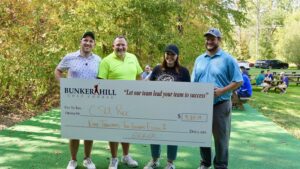 Every September, golfers participating in the CSU Rec Golf Scramble fundraiser arrive at the golf course ready for a day on the links. The experience feels seamless. The event flows from arrival through tee time to dinner and awards with minimal friction.
Hosted by the University Recreation and Wellbeing team at Cleveland State University, the event has become one of the department’s most meaningful traditions. The scramble raises funds for student employee scholarships while bringing together campus partners, community members, and supporters of the CSU Rec Center.
What most participants never see, though, is the months of planning, coordination, and decision-making required to make the event feel effortless and enjoyable. The golfers see the finished product. But behind the scenes, the work begins long before anyone tees off.
An Idea Born During an Uncertain Time
 The CSU Rec Golf Scramble traces its roots back to an unusual moment in higher education (and the world). In 2020, the COVID-19 pandemic forced recreation departments across the country to rethink how they engaged their communities. Chris Stewart, Sr. Assistant Director of Facility Operations, remembers the conversations that started it all.
“In 2020, when we were in the midst of the pandemic, we were trying to be creative in how we could make an impact,” he explained. “Specifically, when we didn’t have an operational building, we were trying to be creative with virtual options, and also ways that we could encourage recreation in spaces that were safe at the time.”
One activity immediately stood out.
“Golf really boomed a lot in the pandemic because it was one of the only activities you could do safely,” Chris said. “It’s, by nature, pretty socially distanced.”
At the time, the concept wasn’t a fully developed plan. It started the way many ideas do: with a brainstorming conversation between colleagues. Andrew Ross, Coordinator of Operations and Events, recalls that moment.
“I was just throwing a lot of random ideas out there, and then I just threw out… ‘We’re both avid golfers. What about a golf scramble?’ From me just kind of spit balling a random idea, we both had a light go off like, ‘I think this could actually work.’”
With that spark of possibility, the two took the idea to leadership with a proposal that was informal at best.
“When I say ‘proposal,’ that’s a very loose term,” Chris joked. “We approached our director and said, ‘Hey, we have this in mind.’” The response was encouraging, with one important condition. “He said, ‘I love it, but you have to make sure that we break even or make money. We cannot do an event that’s going to lose money.’”
That single requirement shaped much of the planning that followed.
Designing the Event Around Student Impact
 Early in the planning process, the team knew the scramble needed a purpose beyond simply hosting a golf outing. They wanted the event to create something meaningful for the department and the students who help power CSU Rec operations every day.
At the time, the department didn’t have a formal scholarship program for its student employees. The golf scramble offered a way to change that and provide some additional support for students during their academic journey. The goal, however, wasn’t to create a massive fundraiser overnight.
“We knew the likelihood of giving away $2,500 or $5,000 scholarships in the first few years wasn’t going to be high,” Chris said. “But maybe we could do enough to give away some $500 scholarships.”
For Andrew, the scholarship element also helped define the identity of the event. “If we just called it ‘Chris and Andrew’s golf scramble,’ we might get some of our friends, but the student scholarship piece was the real-world impact we could point out to encourage participation.”
That mission gave participants a reason to support the event beyond simply enjoying a round of golf.
The Logistics No One Sees
 As is often the case, turning an idea into an annual event required a lot of operational planning. One of the first major decisions involved finding the right venue, which was even more of a challenge given the circumstances and restrictions in place at the time due to the pandemic.
The team started by identifying golf courses within a roughly 30-minute drive radius of campus. Accessibility mattered. They wanted to make it easy for campus partners and community participants to attend without committing to a long drive. Eventually, a conversation with Chad Gibson at Bunker Hill Golf Course stood out.
“Right from that first meeting I had with him, it just felt right,” Andrew said. “He runs events almost every weekend, every year. Having someone who had that background knowledge and expertise was a huge help. Anything we questioned, he had advice on what works and what doesn’t.”
Chris remembers leaving the meeting with the same feeling. “We looked at each other and said, ‘This is a no-brainer. We’re hosting it here.’” The partnership simplified dozens of logistical challenges, including course setup and tournament structure, pacing, registration flow, and dinner coordination.
Understanding How Golf Fundraisers Work
Another early lesson involved the financial structure of golf outings. Many people assume that registration fees drive fundraising totals. That’s rarely the case. “For people who have never run a golf outing, more times than not, your registration fee really isn’t doing much more than paying for the golf, dinner, giveaways, and drink tickets,” Chris explained. “The margins are typically pretty thin.”
That reality forced the team to think strategically about how the event would generate scholarship funding. The answer came from two primary areas: sponsorship partnerships and day-of fundraising activities. “Where the money is made really comes down to sponsorship and those smaller day-of revenue-generating opportunities,” Chris said.
Over time, those efforts grew. The first year brought roughly $5,000 in sponsorship support. Within a few years, that number had more than doubled. That growth helped establish a stable financial foundation for the event and its scholarship program.
Building an Audience from Scratch
Launching a new event also required building an audience from the ground up. The team set a simple first-year target: fill the course. “Let’s just get enough for each hole. Let’s get 18 groups,” Chris said. As a brand-new event without a returning audience, even that number felt ambitious. A full-scale marketing plan was built out and executed, with a lot of direct outreach by staff who leveraged family, friends, and professional networks to build awareness and participation.
As a result, the first year exceeded expectations. The event attracted more than 18 groups and nearly 80 golfers. Much of that early success came from personal invites and grass-roots efforts.
“Chris did a lot of that, pushing the scramble to his friends and connections,” Andrew said. “Without it, I don’t think we’d be at the point we’re at now.” Those early supporters helped establish momentum that continues today and created legitimacy around the event and its cause.
Behind the Scenes: What the CSU Team Handles
 While Bunker Hill manages much of the physical course setup and day-of-event logistics, the CSU Rec team focuses on the planning, coordination, and fundraising elements that make the event successful. The partnership allows Bunker Hill’s staff to handle the operational aspects of the golf course and reception spaces, while the CSU team concentrates on participation, sponsorships, and the overall event experience.
The work begins months before the event takes place. CSU staff manage sponsorship outreach, maintain and update sponsorship packages, and coordinate marketing and promotions across multiple channels, including email campaigns, social media, print materials, website updates, and campus communication platforms. These efforts help attract participants, sponsors, and community support for the event each year.
Fundraising preparation is another major focus behind the scenes. Staff source items and assemble themed raffle baskets that are displayed during the reception, organize and sell numbers for the annual ball drop, and coordinate additional fundraising activities that take place throughout the course on event day.
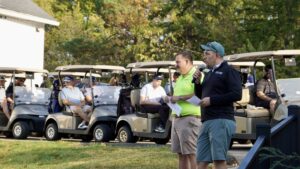
On the day of the scramble, the CSU team manages participant check-in and registration, sets up raffle stations and sells tickets, delivers the welcome introduction and event instructions, works fundraising stations across the course, and helps coordinate the putting contest and other interactive elements.
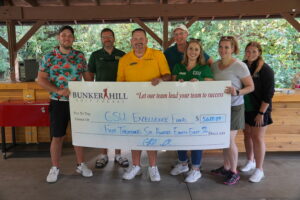
The evening reception brings another round of coordination. CSU staff help run the awards ceremony, announce raffle and ball drop winners, recognize the top finishing teams, and present the scholarship fundraising total. After the event concludes, the team collects participant feedback through surveys and begins preparing for the following year’s scramble.
The Impact Behind the Event
What started as a pandemic-era idea has grown into a meaningful source of support for CSU Rec student staff. Over its first five years, the CSU Rec Golf Scramble has generated more than $36,600 in total net income. From that total, $25,000 has already been distributed in scholarships to 50 students. The remainder supports the department’s CSU Rec Excellence Fund, ensuring the event’s impact continues to grow in future years.
For the golfers who participate each fall, the day feels simple: a round of golf, a dinner reception, and time spent with colleagues and friends. Behind the scenes, the event represents something much larger: a shared commitment to investing in the students who help make campus recreation possible.
 Matt Schmiedl serves as Enterprise Marketing Manager for CENTERS, where he helps shape the organization’s strategic approach to innovation and enterprise marketing across multiple client sites. He is a founding member of the CENTERS AI Council and contributes to the development of AI literacy, governance, and practical application across the organization. Since joining CENTERS at Cleveland State University in 2013, Matt has built a distinguished career advancing campus brands through systems thinking, data-informed strategy, and emerging technologies. A nine-time NIRSA Creative Excellence Award recipient and CENTERS Quest for X honoree, he brings more than a decade of higher education experience helping institutions and teams expand campus impact.
  Chris Stewart serves as Senior Assistant Director of Facility Operations for CENTERS at Cleveland State University, overseeing daily operations for both the CSU Recreation Center and Student Center, as well as the Conference and Event Services team. He manages facility capital projects and renovations while supporting teams responsible for membership services, custodial operations, and preventative maintenance. Chris also coordinates space scheduling, manages internal and external reservations, and negotiates contracts for large-scale events and facility rentals. Before joining Cleveland State University, he spent more than a decade working in collegiate recreation at institutions including The Ohio State University, Texas A&M University, The University of Texas at Austin, and UCLA.
  Andrew Ross serves as Coordinator of Operations and Events for CENTERS at Cleveland State University, overseeing part-time operations staff in both the Student Center and Conference and Event Services. Previously, a Graduate Supervisor of Facility Operations within the Recreation Center, he brings a strong campus recreation perspective to the department’s expanding event operations. Andrew helps oversee event setup and tear-down while supporting the day-to-day condition of the CSU Student Center, which serves nearly 1.5 million visitors each year. Outside of work, he enjoys spending time with friends, family, and his dog Caesar, and maintains a family tradition of golfing annually in Kiawah Island, South Carolina.