
CENTERS IN ACTION
How a Marshall University Initiative Revealed the Broader Value of Bundled Operations
Campus facilities are often easiest to evaluate when their purpose is clear and their users are well-defined. A residence hall houses students. A classroom supports instruction. A recreation center provides space for wellness, sports, programs, and connection outside the classroom.
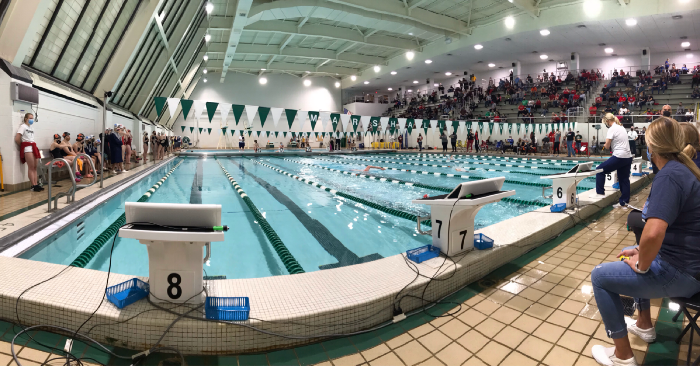
Some facilities are more complicated. They serve several university functions at once, carry a long history with the surrounding community, and require specialized staffing, operational structures, maintenance, and safety oversight. Their value is distributed across departments and user groups. Many of those outcomes that do not appear together in one budget or document. When a facility needs investment, or its future comes into question, the institution has to decide what it is evaluating. Is it measuring the cost of operating the space or the full role the space plays in campus and community life? That was the question surrounding Fitch Natatorium at Marshall University—and an example of how bundled campus operations can help institutions evaluate complex assets through a wider lens.
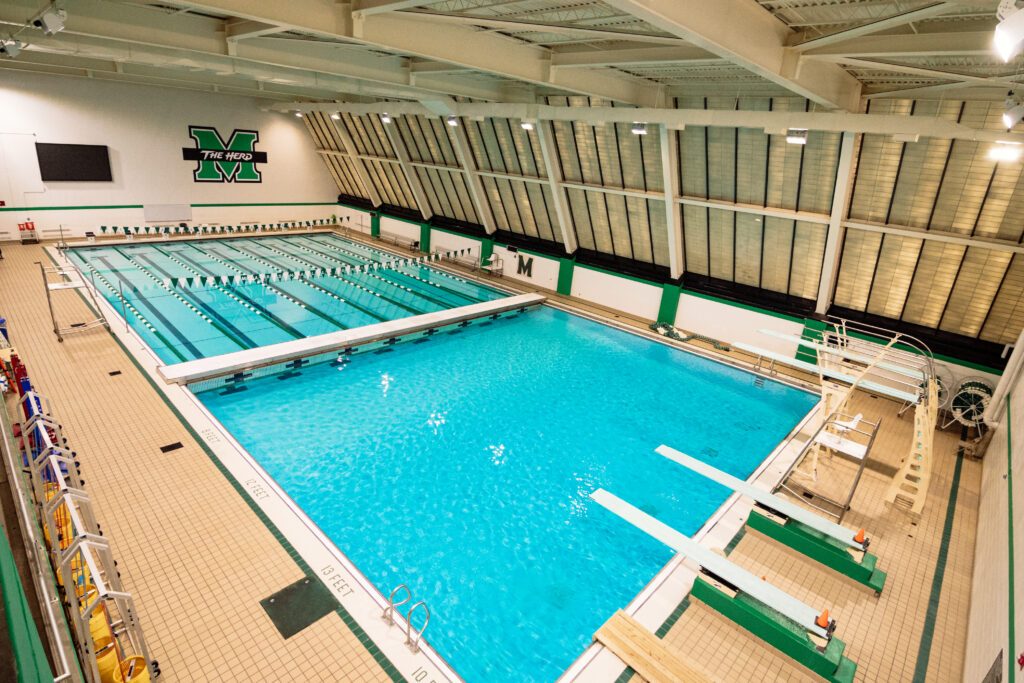
The facility is part of the Henderson Center. It supports Marshall Athletics, Campus Recreation, area high school programs, local youth and club swimming, lifeguard training, and regional aquatics competitions. It also carries the operational demands of any pool: well-trained staff, reliable supervision, safety oversight, specialized cleaning, equipment maintenance, and clear scheduling. Its needs cannot be separated neatly from the people and programs that depend on it.
For Marshall, the question was not simply whether the natatorium could continue operating. The university needed to weigh the operating costs and required capital investment required against the full value the natatorium created for students, Athletics, Campus Recreation, and the surrounding aquatics community.
A Community Asset Came into Sharper Focus
Project DIVE emerged during a period of uncertainty around Marshall’s swim and dive program and the future use of Fitch Natatorium. When the university announced that the team would be discontinued, it also raised practical questions about the facility’s future, including how available pool time could be used and how the natatorium might continue serving the broader community.
The announcement prompted strong interest from local aquatics stakeholders, who emphasized the natatorium’s importance to swimmers, schools, programs, and families throughout the region. Their response brought into focus uses and outcomes that were not fully visible through the facility’s operating statement alone. Marshall listened to that feedback while weighing the facility’s operating needs, capital requirements, and broader mission. The university later reinstated the swim and dive team. Project DIVE continued as a structured effort to understand how the natatorium could best serve priority university users and the regional aquatics community over time.
Project DIVE provided a structured path for that work. The assessment of the facility’s condition, operating needs, role in regional aquatics, and future priorities. The process gave Marshall a way to study the decision from multiple angles and weigh mission, margin, access, safety, and long-term stewardship together.
Bundled Campus Operations Created a Stronger Starting Point
CENTERS manages Campus Recreation and Fitch Natatorium at Marshall as part of a bundled operating partnership. That arrangement did not resolve every challenge facing the facility, but it gave the university an established foundation when the natatorium required more focused attention.
CENTERS approaches campus operations as connected systems rather than separate facilities with separate problems. The work begins with the operating conditions that shape the user experience. Those include clear responsibility, trained staff, sound risk-management practices, appropriate maintenance, and an understanding of daily facility use. In an aquatics environment, those conditions are especially important because safety, staffing, equipment, programming, and access are closely connected.
The immediate work at Fitch Natatorium was practical. The facility needed stronger safety oversight, clearer scheduling, and a more dependable approach to cleaning and daily care. Existing lifeguard training and staffing systems gave the team a way to establish that foundation. Equipment and operational resources from the recreation center could also support the natatorium. That reduced the need to build a separate support structure for every function.
The bundled model contributed more than shared resources. It gave Marshall a team that could apply consistent operating standards across related facilities. The team could also address the natatorium’s specialized requirements. That combination became especially important as the university considered the facility’s longer-term future.
From Daily Operations to Strategic Assessment
With Project DIVE underway, Marshall asked Michele Muth, Director of Campus Recreation, and the CENTERS site team to lead the work. That decision reflected the confidence built through the existing operating relationship. The team had already demonstrated its ability to manage the natatorium within the broader recreation operation. It also understood the facility’s immediate needs and its place within the university’s campus system.
The Action Learning Team was charged with examining the natatorium’s current condition, operations, use, safety needs, investment priorities, and strategic potential. Project DIVE, short for “Discover, Investigate, Validate and Execute,” gave the team a formal structure for work that extended beyond daily management. It allowed the CENTERS team to apply its operating knowledge in a cross-functional setting and develop expert recommendations for the work needed to strengthen the facility.
Muth and the site team convened representatives from Athletics, facilities and operations, local high schools, youth swimming programs, and the broader aquatics community. Each participant brought a different perspective on the facility’s use, needs, and future. The conversations considered regional swim programming, competition demand, building and infrastructure needs, facility access, and the limits created by a finite amount of aquatic space.
Project DIVE gave those stakeholders a setting to work through the practical tradeoffs involved in serving different users. The team identified areas requiring repair, replacement, or updates, and developed recommendations to guide future investment and management decisions. Because the CENTERS team already understood the operation and had relationships across campus, the assessment remained grounded in both stakeholder input and the realities of implementation.
The Full Value of a University Natatorium
Bundled management gave the CENTERS team a more complete view of what Fitch Natatorium supports. Project DIVE documented that value, tested it against stakeholder input, and connected it to the facility’s operating and investment needs.
Fitch Natatorium’s role extends well beyond the university’s own programs. It is one of the few facilities in the Huntington area equipped to support competitive swimming and diving, including high school and club programs that depend on access to a deep-water pool. The facility also provides the depth needed for lifeguard training, allowing the Marshall team to prepare and certify lifeguards who serve campus programs as well as other pools in the community.
That regional role gives the natatorium a significance that is easy to miss when the conversation centers only on maintenance and operating costs. For many local swimmers, coaches, families, and programs, access to the facility is closely tied to whether they can train, compete, or continue participating in aquatics without traveling outside the area.
Muth described what the team heard as it brought those perspectives together: “There’s a lot of passion for aquatics around here. You have high school teams, you have USA Swimming that’s growing, and you have a lot of people who use that pool.” That combination of university use, regional demand, and specialized access is central to the facility’s value.
The assessment identifies Fitch Natatorium as both a university and regional asset, with connections to student-athlete experience, youth access, community partnerships, workforce development, and revenue opportunities. It also recognizes the work required to sustain safe operations, improve the user environment, and create a more sustainable pattern of use. The findings show why the natatorium’s future could not be understood through direct operating cost alone.
How Operations Expertise Strengthened Strategic Planning
The Project DIVE team’s role was to provide Marshall leadership with an informed assessment and recommendations on the improvements, operating conditions, and sequencing needed to help the natatorium meet the university’s goals.
That role required the team to look at the facility from two vantage points. As operators, they understood the realities of managing a campus facility, creating a positive user experience, mitigating risks, and activating spaces. As advisors, they could step back from daily demands, convene stakeholders, organize what they learned, and identify the decisions leadership would need to consider and the rationale behind them.
Muth described the work as a consultant-like role within an existing partnership. The team could facilitate discussions with a neutral mindset, setting aside personal preferences while remaining grounded in the operating realities of the facility. That approach allowed the group to focus on questions that extend beyond any single department: Which improvements would have the greatest effect on the facility’s function? What conditions are necessary to support priority users? Where do building layout, locker room capacity, access points, and scheduling practices limit the facility’s ability to host programs and events?
This advisory capacity is another benefit of the bundled partnership. Marshall gained not only day-to-day operating expertise, but also a team that could organize a complex assessment, facilitate productive conversations, and translate operational knowledge into a practical planning process. That role was strengthened by the team’s understanding of how each decision would affect the facility, its staff, and its users.
What Bundling Made Possible at Marshall
Bundled operations are often discussed in terms of efficiency. That benefit is real at Marshall, but the more significant value is the ability to connect management with stewardship.
Because the CENTERS team was already trusted to manage the daily operation, Marshall could draw on people who understood the facility and its users to guide a broader assessment. The process connected immediate operating needs with longer-term questions about the natatorium’s role, use, and sustainability.
The partnership brought facility management, aquatics expertise, stakeholder facilitation, and strategic planning support into one relationship. That allowed financial stewardship, revenue opportunities, safety, access, student experience, community value, and facility care to be considered together rather than as separate issues.
Project DIVE’s recommendations reflect that connected view of the natatorium’s future. They include phased improvements to the facility’s core infrastructure and pool equipment, upgrades to locker rooms and other user-facing areas, improvements to access and circulation, and a more intentional approach to scheduling and use. The recommendations also address how the natatorium can better support university priorities while sustaining its role in regional aquatics programming. Marshall continues to evaluate potential capital improvements and renovations for Fitch Natatorium. The swim and dive program remains in place, and CENTERS continues to operate the facility under an extended agreement.
Lessons From Project DIVE
 Marshall’s experience offers several lessons for institutions considering how bundled operations can support complex campus assets.
Bundling can create readiness before a challenge becomes urgent. Marshall had an integrated team in place with aquatics experience, operating systems, and an understanding of the facility’s users. That gave the university a stronger starting point for stabilizing the operation and assessing its future.
Bundled operations can also provide a wider lens for decision-making. Project DIVE considered the facility’s operating needs alongside safe access, student and community engagement, competitive programming, and sustainable use. A bundled partnership can add advisory and facilitation expertise to the operating relationship. At Marshall, the same team responsible for management could lead a structured assessment, bring together diverse perspectives, and guide planning informed by both institutional goals and operating realities.
Marshall’s experience shows how bundled operations can help an institution respond to an immediate challenge without starting from scratch. The existing partnership gave the university the operating knowledge, stakeholder relationships, and advisory capacity to evaluate Fitch Natatorium as both a financial responsibility and a mission-serving university and community asset.
 About the Author