
P3 success increasingly depends on operations that align mission and margin.
 Higher education operates in an environment marked by inflation, enrollment uncertainty, demographic decline, and a negative sector outlook. The 2025 Higher Education P3 State of the Industry Report, published by the P3 Higher Ed Resource Center and powered by Brailsford and Dunlavey, notes that despite these pressures, the pipeline of public-private partnership projects remains strong and is expanding to include more student-focused facilities such as athletics, wellness spaces, and academic buildings. As this shift accelerates, many institutions are beginning to evaluate how optimized P3 operations for student life facilities can strengthen mission delivery, financial performance, and long-term resilience.
This momentum suggests that institutions are rethinking how they plan, finance, and operate core campus assets. As colleges increasingly view student life facilities as essential to belonging, recruitment, and retention, partnership models that once focused on student housing are starting to surface in discussions about the broader student experience.
Jeffrey D. Turner, co-President of Brailsford & Dunlavey, summarizes this shift: “P3s have regained momentum as institutions confront mounting financial and demographic headwinds… Universities are looking for innovative partnerships to enhance the student experience and considering a new wave of P3 assets including sports and recreation and mixed-use projects to advance institutional priorities.”
Why Student Life Facilities Are Entering the P3 Operations Conversation
Capital Pressure Meets Rising Student Expectations
Higher education is facing a tough construction market, making traditional capital projects more difficult to finance. Procurement timelines conflict with inflationary pressures and often institutional borrowing capacity must be reserved for academic priorities. Federal funding uncertainty and market volatility have created the need for new forms of project execution.
At the same time, student expectations continue to rise. Recreation and wellness complexes, student centers, arenas, and student life assets shape identity, belonging, and engagement. These spaces are essential to the contemporary student experience, yet they carry operating demands that extend well beyond facilities management. The convergence of these factors is bringing student life assets into view as potential candidates for innovative partnership structures.
Institutions also see P3s as a way to shorten procurement timelines, transfer selective operational risk, and bring facilities online more quickly during periods of cost volatility. In many cases, a P3 preserves debt capacity for core academic priorities while allowing student-serving projects to advance.
The P3 Report’s Relevance to Student Life Facilities
 Although the P3 Higher Ed Resource Center’s report centers on housing, its broader findings apply to campus life environments:
- Institutions are using partnerships to achieve greater speed to market during cost volatility.
- They are turning to off-balance sheet structures to preserve debt capacity.
- They are leveraging private-sector expertise to ensure long-term operational reliability.
- They are pursuing models that create both financial predictability and institutional resilience.
These dynamics are directly relevant to student life projects, which are equally susceptible to cost escalation and dependent on operational sophistication.
Why Operational Strategy Drives P3 Success in Student Life Facilities
Beyond Financing and Delivery
Once a facility opens, the operational model becomes the mechanism through which institutional priorities are realized and fiscal targets are achieved. In student life environments, operations shape everything from student engagement to program quality and financial sustainability. As campuses consider new partnership structures, they are increasingly recognizing that optimized P3 operations for student life facilities determine whether institutional priorities are realized beyond ribbon-cutting.
Operational decisions determine student center activation levels, wellness programming alignment with institutional priorities, arena priority use scheduling, and whether community partnerships enhance or complicate campus life. Operations also determine the sustainability of the pro forma and the credibility of the facility’s financial performance.
In many P3 structures, the credibility of the operating partner is also material to financing. Underwriters, developers, and 501(c)(3) owners often require an experienced operator whose track record reduces perceived risk.
Kim Martin, CENTERS Vice President of Business Development and former B&D Director, notes that campus leaders often underestimate how much “the operator must hold financial, programmatic, and stakeholder expectations in balance.” In a P3, she explains that the operator becomes the coordinating force that aligns coherence to competing interests.
Student Experience as Operational Strategy
As Joanna Prociuk, CENTERS Associate Vice President of Talent and Innovation and former Director of Recreation at Jacksonville State University notes, P3s for student life facilities can feel unfamiliar or even taboo on some campuses, often because of concerns about losing control of mission-centered work. Yet, operational alignment can strengthen rather than dilute mission delivery.
Student life facilities are not passive buildings. They are active learning environments where belonging, leadership development, wellness, and identity are shaped daily. The operator’s philosophy therefore becomes inseparable from the institution’s mission.
This insight reframes a common misconception. Outsourcing does not diminish institutional influence over student experience. If designed appropriately with a performance contract built on strategic key performance indicators, partnerships should enhance the student experience.
Jo Prociuk reflects, “When operations are aligned with educational purpose, you strengthen mission delivery, not diminish it.”
The Dual Mandate: Balancing Mission and Margin Through Operations
Financial Sustainability Supports Educational Impact
In a volatile financial climate, student life facilities must be resilient. They require stable budgeting, responsive staffing models, accountable governance, and program design that meets both educational goals and financial obligations. The dual mandate of mission and margin is not a tradeoff, but a framework through which institutions can build sustainable, student-centered facilities.
Unlike housing, most student life facilities typically depend on fluctuating student fees as the primary revenue stream supported by speculative revenues. Their financial performance depends on programming strength, staffing efficiency, community engagement, and student participation. This makes operational competency central to the success of any student life P3 model.
The P3 Higher Ed Resource Center report reinforces this need for discipline. It notes that institutions adopting an “if we build it, they will come” approach risk credit deterioration if operating models are not grounded in realistic demand and structured accountability. Student life P3s require experienced operators who understand both the economics and the educational purpose of the facility. This is why campuses exploring partnerships are evaluating whether optimized P3 operations for student life facilities can create a stronger balance between mission and margin.
Governance as an Expression of Mission
Governance plays a central role in balancing mission and financial performance. Student life facilities often serve multiple constituencies, and P3 models may involve municipalities, tourism organizations, health systems, athletics departments, or community partners. The operator acts as the institution’s proxy across these relationships, helping to ensure access, fairness, and mission alignment.
Operations, in this sense, become a form of shared governance that must reflect institutional values in everyday decisions.
Lessons From P3 Operations on Real CENTERS-managed Campuses
Jacksonville State University Student Recreation Center
JSU’s foundation-developed recreation center accelerated a long-planned investment and strengthened campus vibrancy. The P3 model enabled a Construction Manager at Risk project delivery with record implementation time delivered under budget. Enrollment gains following its opening highlight how student-centered operations contribute to recruitment and retention.
Read more about CENTERS @ Jackson State University
Marshall University Recreation Center
As the nation’s first collegiate recreation P3, Marshall demonstrated the long-term viability of outsourced recreation management. The P3 approach enabled Marshall to preserve debt capacity while opening on-campus residence halls and the recreation center by bundling both projects under a national special entity purpose structure led by Provident Resources Group and a long-term ground lease. Its success reflects operational discipline as much as financial structuring.
Read more about CENTERS @ Marshall University
The Sonnentag Complex at the University of Wisconsin-Eau Claire
This multi-stakeholder project integrates the university, the city, the health system, and regional partners. The project was implemented using a mix of private philanthropy, student fee funding, local and corporate support, and a 501(c)3 enabling ownership structure. Maximizing diverse campus user access in such an environment requires operational clarity and governance fluency, both of which were embedded from the outset.
Together, these campuses illustrate how the operating paradigm ultimately shapes institutional outcomes, while supporting the bottom line.
Read more about CENTERS @ The Sonnentag
How Student Life P3s Take Shape
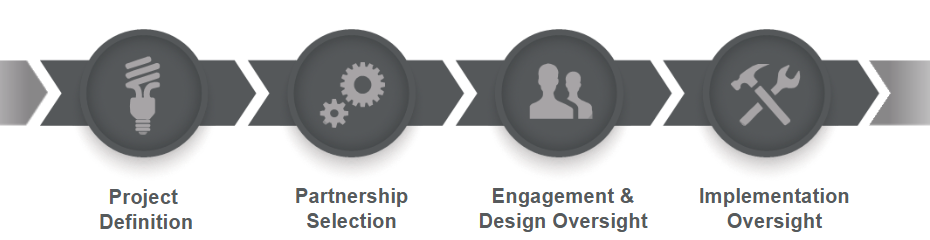
Most student life P3s begin not with financing but with clarity of purpose. Institutions first articulate the student outcomes the facility must support, then assess feasibility and risk tolerance. From there, leaders evaluate ownership structures, explore potential partners, and consider governance approaches that preserve mission alignment. Although each campus follows its own path, successful projects define operational expectations early, ensuring that mission, programs, and financial performance remain connected throughout development and beyond opening day.
Reframing P3 Operations as Strategic Leadership Work
The Future of Student Life Facilities
Institutions exploring P3s for student life facilities are asking deeper questions than in past cycles. They are considering how operations will support belonging and well-being, how governance will minimize friction, how financial and programmatic goals can coexist, and how resilience can be built into the model from day one.
These are not technical questions. They are institutional philosophy topics that shape the educational impact long after the ribbon cutting.
As pressures mount and the campus landscape continues to evolve, student life P3s will require operators who understand both the culture of higher education and the complexities of auxiliary enterprise management. Operations, not procurement, will define their legacy.
 Further Reading: 2025 Higher Education P3 State of the Industry Report: This article draws on insights from the 2025 Higher Education P3 State of the Industry Report, published by the P3 Higher Ed Resource Center, powered by Brailsford & Dunlavey. The report analyzes national trends, financial conditions, and emerging project types across higher education. Read the full report.
About the Contributors
 Kim Martin: Vice President of Business Development, CENTERS
Kim brings extensive experience in public-private partnerships for higher education. Before joining CENTERS, she served as an advisor with Brailsford and Dunlavey, where she guided institutions through planning, financial structuring, and procurement for partnership-based campus projects. Her work focuses on helping colleges and universities design operational models that advance educational outcomes while strengthening financial sustainability.
 Joanna Prociuk: